
Is the Orange County Housing Market Heading Toward Another 2008?
Here is the formatted version of your text, with all verbiage, spelling, and phrasing strictly preserved:
The Orange County housing market has slowed. Mortgage rates have risen, buyer demand has dropped, and homes are taking longer to sell.
Naturally, that has brought back a question we hear whenever the market shifts:
Are we heading toward another 2008?
While today’s market certainly has its challenges, the data shows that the conditions underneath it are dramatically different from those that led to the Great Recession.
Let's take a closer look at what is happening in the Orange County housing market and what it means for local homeowners, buyers, and sellers.
2008 vs. Today: A Very Different Housing Market
One of the biggest differences between 2008 and today's Orange County real estate market is housing supply.
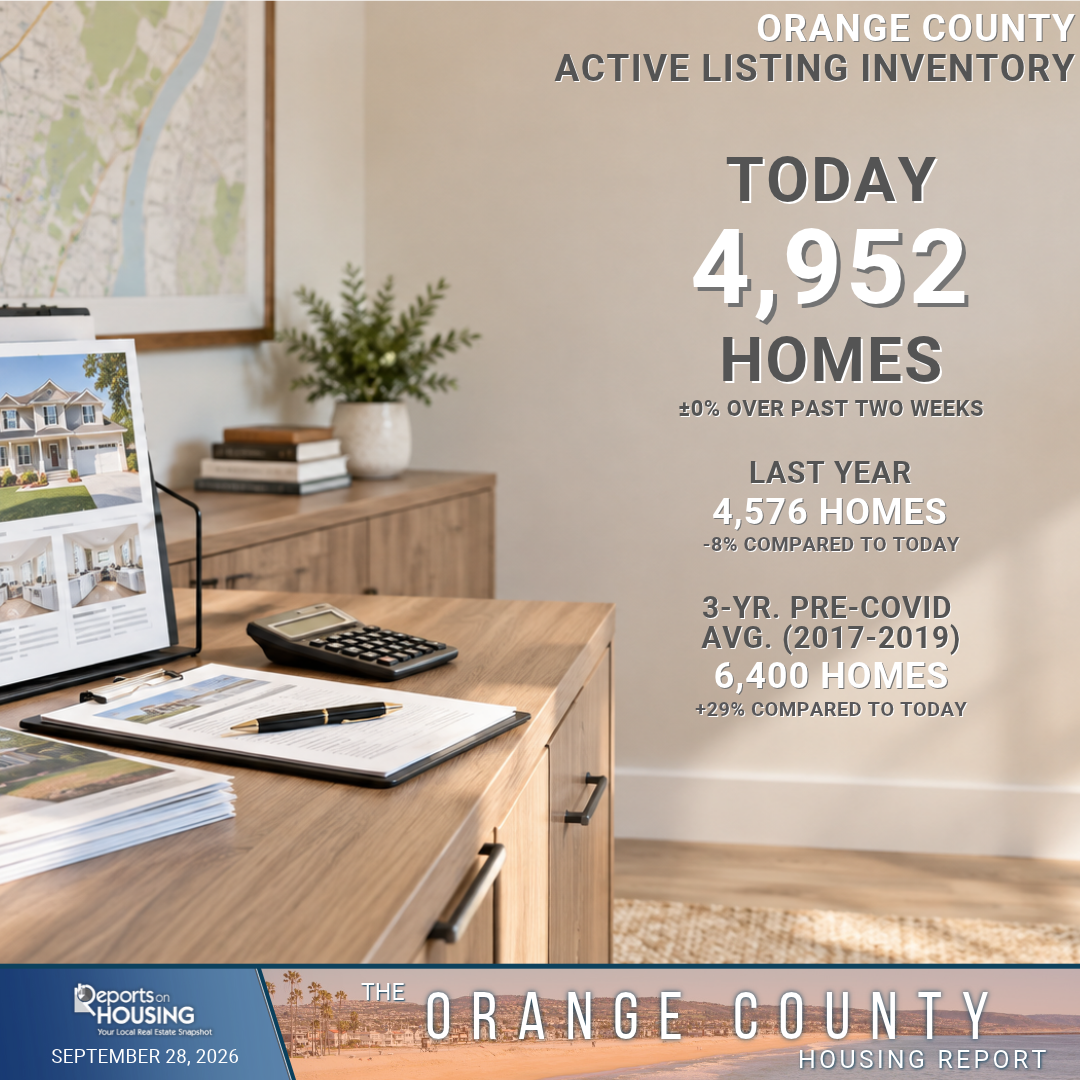
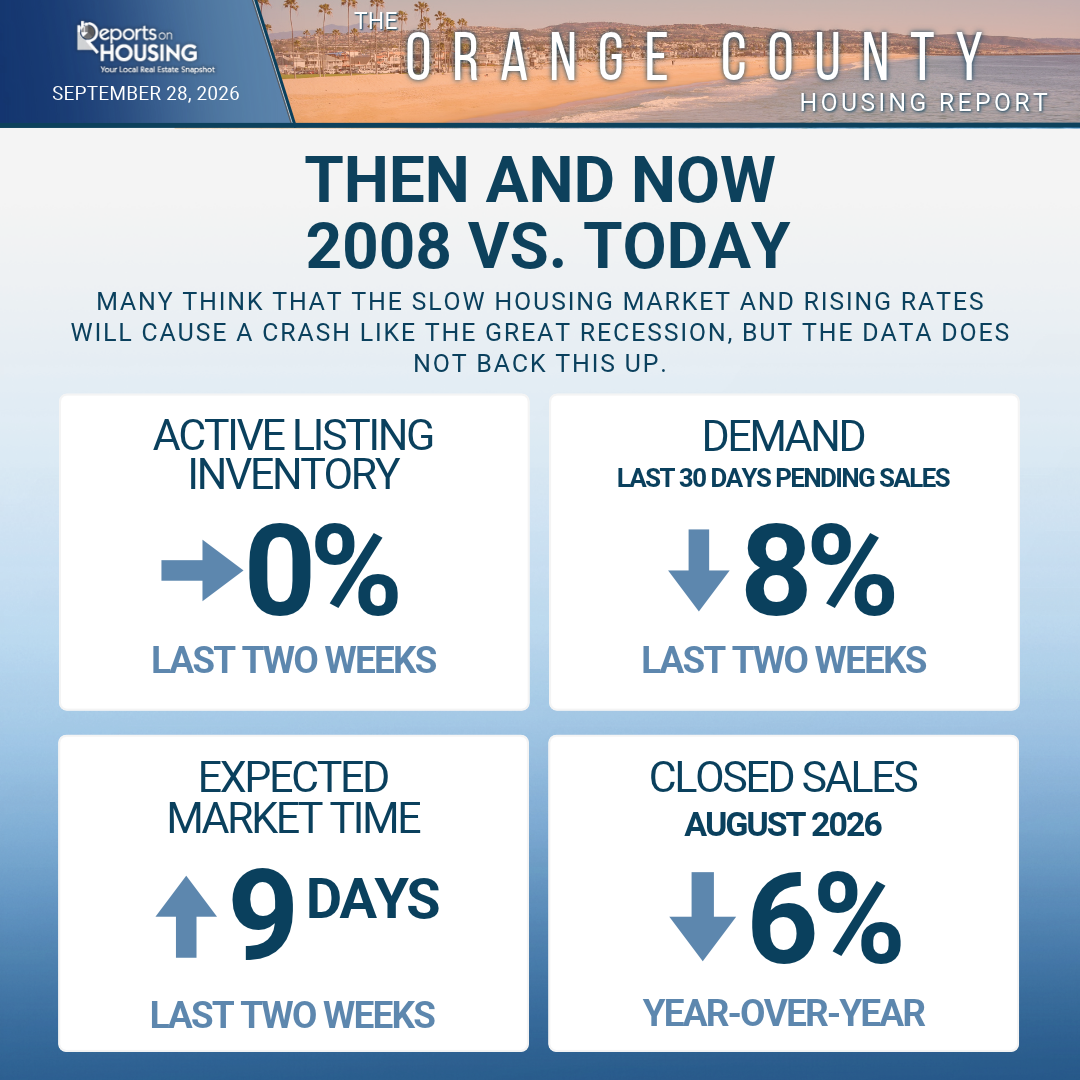
Leading into the Great Recession, Orange County inventory climbed to nearly 18,000 homes for sale. Today, there are just 4,952 active listings. That matters because major housing downturns generally require more than slowing buyer demand. They also require a significant oversupply of homes and large numbers of homeowners who are forced to sell.
We aren't seeing either of those conditions today.
Why Is Buyer Demand So Low?
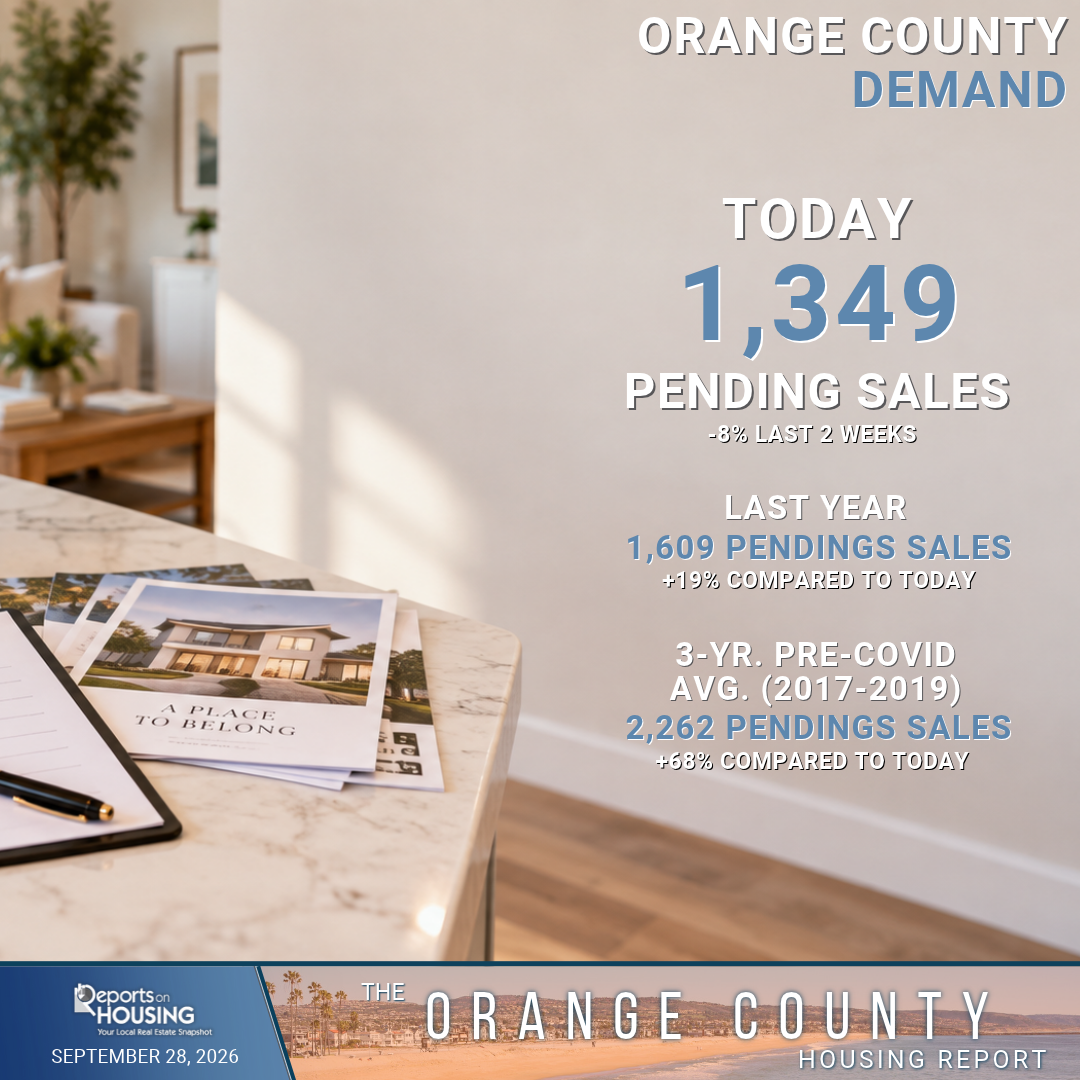
Today's slowdown is being driven primarily by affordability and mortgage rates. Orange County buyer demand fell to 1,349 pending sales, its lowest September reading since 2007. That's also well below the 2,262 pending sales that Orange County averaged during the three years before COVID.
Mortgage rates are playing a major role. Rates climbed from around 6% in February to approximately 7.5% by late September, putting additional pressure on monthly payments and sidelining some would-be buyers. The important distinction is why demand is low.
Buyers aren't necessarily walking away because they believe Orange County real estate is collapsing. Many are simply struggling with what today's home prices and mortgage rates mean for their monthly payment.
Homes Are Taking Longer to Sell
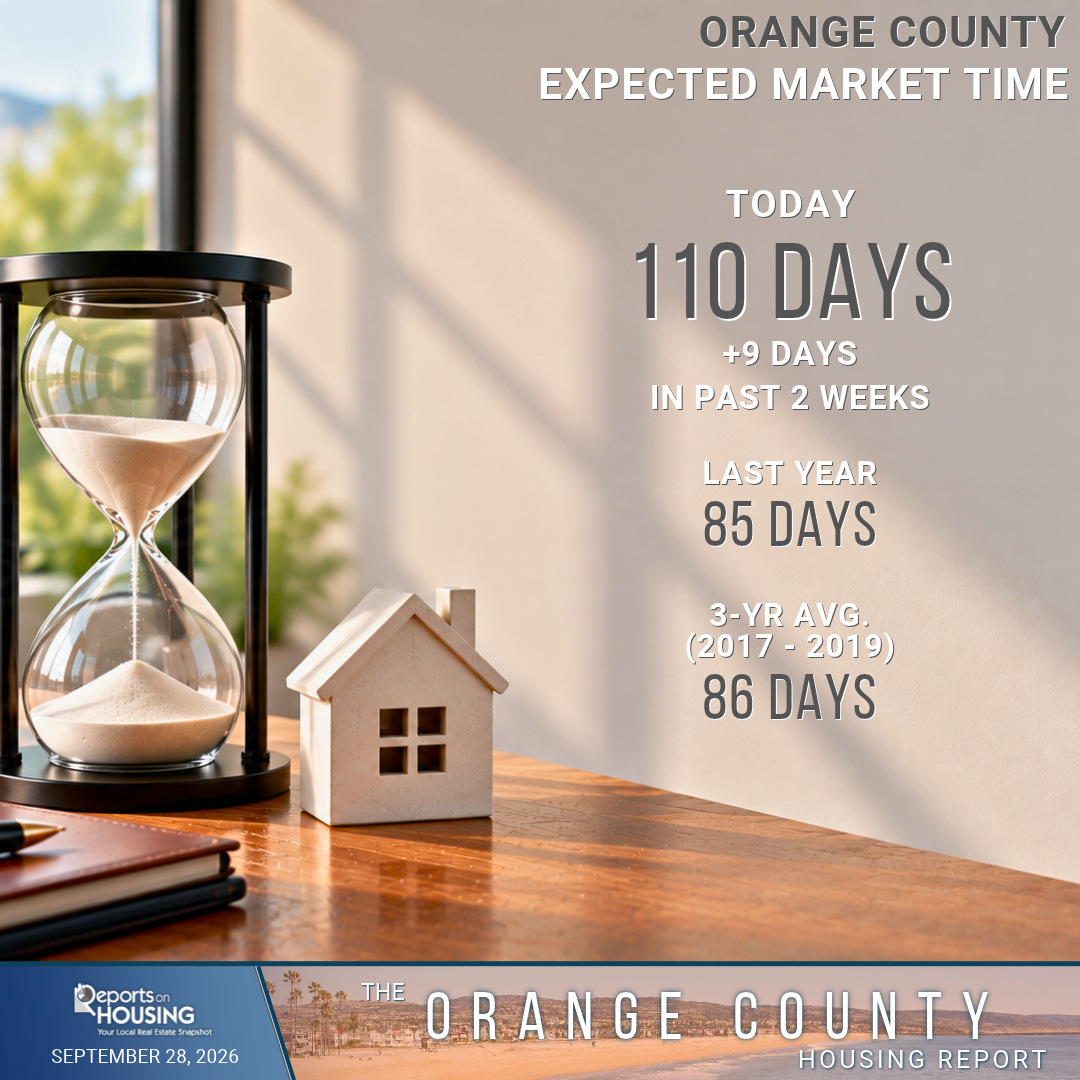
When buyer demand drops but inventory remains relatively steady, homes naturally take longer to sell. Orange County's Expected Market Time recently jumped from 101 days to 110 days. Last year, it was just 85 days.
There is also a noticeable difference depending on property type:
-
Detached homes: 99 days
-
Condos and townhomes: 128 days
The attached-home market is currently moving considerably slower than the detached-home market. For sellers, this is where strategy becomes extremely important. Buyers have more options, and an overpriced home can sit while properly priced competition gets the attention. Pricing based on where the market is today, rather than where it was six months or a year ago, can make a significant difference.
The Biggest Difference From 2008? Homeowners Have Equity
This is one of the most important pieces of today's housing story. Before the Great Recession, lending standards were much looser. Subprime mortgages, low or no down payments, adjustable-rate products, and minimal documentation left many homeowners financially vulnerable. Today's homeowners are in a very different position. There is approximately $11.7 trillion in tappable homeowner equity nationally, compared with about $5 trillion in 2006. Even more striking, approximately 40% of homeowners have no mortgage at all. That strength shows up clearly in Orange County's distressed-sale numbers. In 2008, Orange County recorded 10,244 closed foreclosures and short sales. In 2009, that number climbed to more than 13,000.
Through August 2026? Just 25.
That's an enormous difference.
Could Orange County Home Prices Still Decline?
Yes. A market doesn't have to crash for home values to soften.
According to the report, Orange County home values were still 2.8% higher year over year, but weakening demand could put downward pressure on prices month to month if mortgage rates remain elevated.
That's very different from predicting another Great Recession.
A major housing collapse generally requires three ingredients working together:
-
Excessive inventory.
-
Low buyer demand.
-
Sellers who are forced to sell.
Right now, Orange County clearly has low demand. But inventory remains relatively limited, and distressed sellers make up only a tiny fraction of the market.
That distinction is important when interpreting housing headlines.
Homes Are Still Selling in Orange County
Despite the slower pace, transactions are still happening.
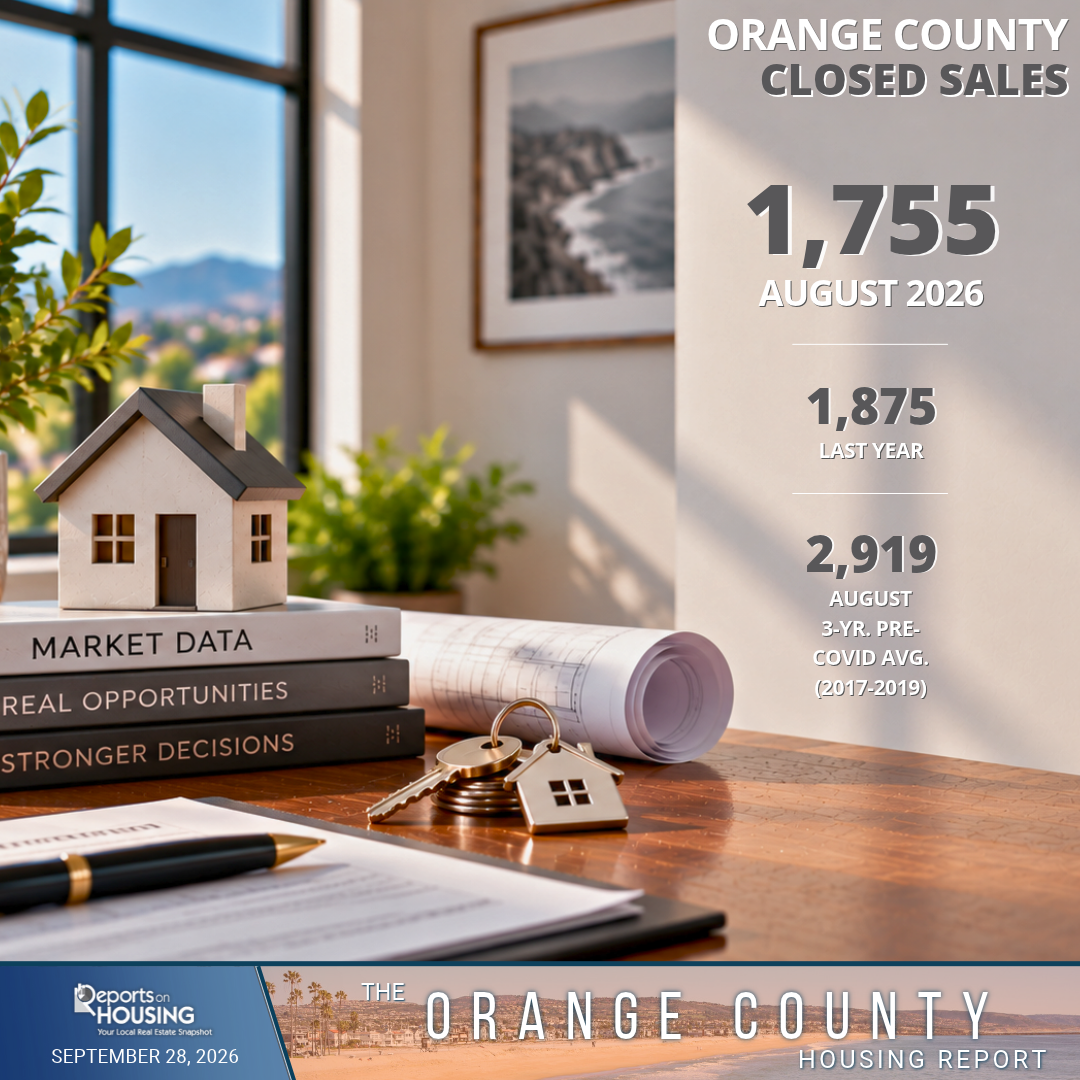
Orange County recorded 1,755 closed residential resales in August, and homes sold for an average of 99.5% of their final list price.
Even more telling, 99.72% of closed sales involved sellers with equity, rather than foreclosures or short sales.
What Does This Market Mean for Buyers and Sellers?
For sellers: Today's market rewards preparation. Pricing correctly from the beginning, understanding your competition, and making sure your home shows well are more important when buyers have choices. This isn't a market where sellers can simply add a little extra to the price and wait for someone to come along.
For buyers: The slower pace can create opportunities. Buyers generally have more time to evaluate properties and potentially negotiate on price, repairs, closing costs, or other terms. But a slower market doesn't necessarily mean sellers are desperate or that deeply discounted homes are everywhere.
The opportunity is in understanding where leverage exists on a specific property.
The Bottom Line: Slow Doesn't Mean 2008
The Orange County housing market has clearly shifted.
Higher mortgage rates have weakened demand, homes are taking longer to sell, and buyers have more negotiating power than they did during the ultra-competitive markets of the past several years.
But today's fundamentals look very different from 2008.
Inventory is far below Great Recession levels. Lending standards are stronger. Homeowners have significant equity. And foreclosures and short sales remain an extremely small portion of the Orange County housing market.
So while home prices can certainly fluctuate and some areas or price ranges may experience more pressure than others, a slower housing market and a housing crash are not the same thing.
If you're thinking about buying or selling a home in Orange County, the most important thing is understanding what's happening in your specific neighborhood and price range, not simply reacting to national headlines.
Have questions about your home or the Orange County real estate market? Contact Jordan Bennett & Associates for a personalized look at your options
Categories
Recent Posts




To receive our detailed monthly Orange County Newsletter subscribe here!
GET MORE INFORMATION
GET MORE INFORMATION
REALTORS®, BROKER-OWNERS Lic# 01850869 | 01929023